Call:
301-990-3030
Address:
15235 Shady Grove Road, Suite 105, Rockville, Maryland 20850

Toys:
No group toys will be provided. Especially because it would be impossible to clean every group toy after every child, we have created a system where each child has his or her own bucket of toys for the duration of their visit. These toys are given to the child upon their arrival in the waiting room and kept throughout the visit. After the bucket has been used and prior to the next use, all of the toys are disinfected.
Waiting Room:
We always strive to minimize your time in the waiting room.
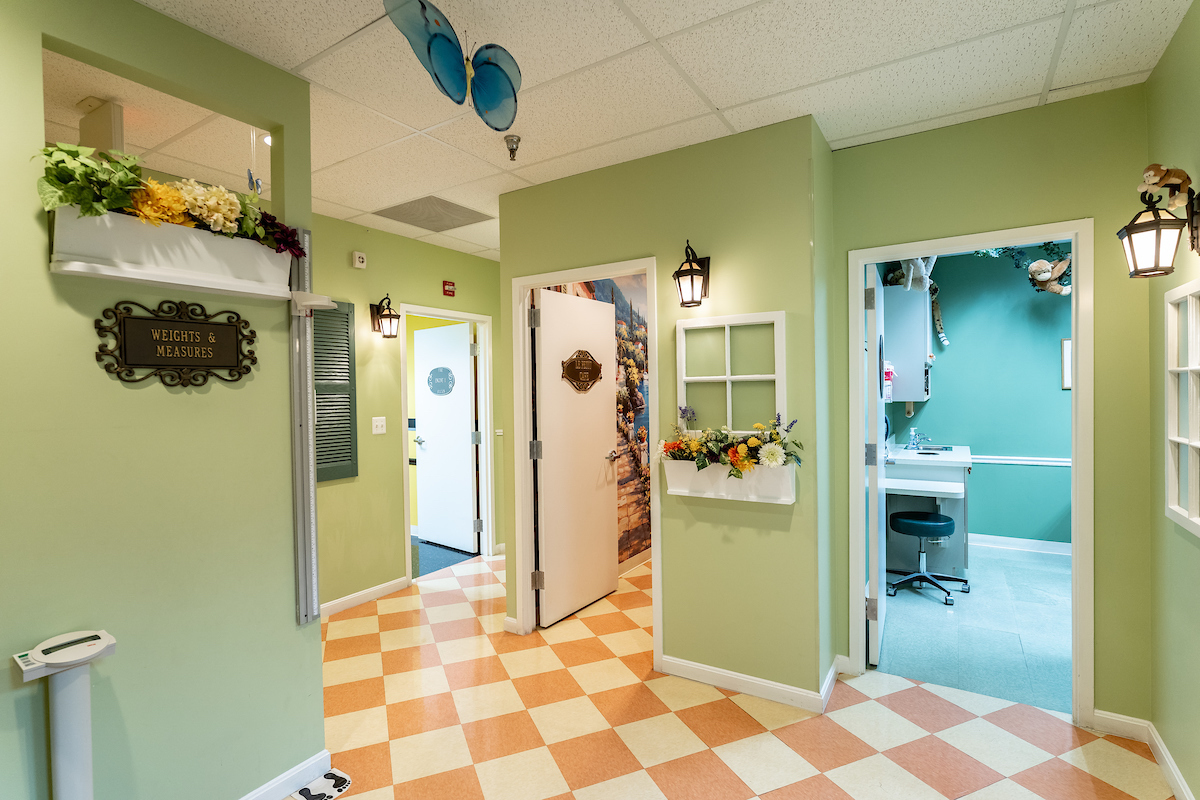
Examining Rooms:
Although table paper prevents some contamination, the use of it is an ineffective substitute for true examining room infection control. If in fact the only surface that the doctor, patient, and parent touched throughout the entire visit were the table paper, simply changing it would suffice. However, changing the paper does not disinfect the rest of the potentially contaminated examine room surfaces. After every patient visit, we will use a hospital-grade antimicrobial wipe to disinfect the entire examining room, including the part of the examining table not covered by the paper as well as the doorknobs, drawer handles, computer keyboards, and exam room chairs. The room is only ready for the next patient after all of these surfaces have been disinfected.
Hand Disinfection:
Throughout the office, you will notice what look like small, upside down canisters of whipped cream attached to the walls. These are not for spontaneous ice cream socials; rather it is the most effective way of keeping my hands disinfected in between patient appointments. The canisters contain an alcohol based disinfectant foam that has been shown to be substantially more effective at disinfecting hands then the conventional soap and water system (Guideline for Hand Hygiene in Health-Care, MMWR. 2002; 51:1-44). Additionally, proper hand washing techniques are very time consuming and are rarely used in traditional doctors’ offices.
We are often asked why we do not have two separate waiting rooms. In theory, having two waiting rooms sounds like a wonderful way to decrease the incidence of children being unnecessarily exposed to contagious infections in a doctor’s office. However, as clearly stated in the American Academy of Pediatrics Policy Statement on Infection Control in Physicians’ Offices:
There are no studies documenting the need for, or benefit of, separate waiting areas for well and ill children. Efforts should be made to limit transmission of infectious agents by avoidance of crowding, shortening waiting times, and minimizing the sharing of toys.
Thus, in designing the office, we purposefully chose not to create two separate waiting rooms. Rather, we chose to focus on those areas that have been proven to reduce disease transmission in any setting, whether it is a doctor’s office, shopping mall, grocery store, or your own home.
Most infections are spread by transmitting a germ from a contaminated surface to a mucous membrane. When we say, “contaminated surfaces,” we are referring to surfaces where a living germ has landed or been placed (usually by a contaminated hand), such as doorknobs, elevator buttons, chair rails, toys, and other people’s hands. Mucous membranes are parts of your body that can internalize a germ and thus lead to infection. These include your eyes, nose, and mouth. After several hours, many germs die and the contaminated surfaces usually become less infectious. Therefore, the vast majority of infections are transmitted when a child or their caregiver touches a contaminated surface and thereby contaminates their hands, and then touches their (or someone else’s) eyes, nose, or mouth.

For over a decade, we’ve been consistently thrilled with the medical service Dr. Hirsch provides to our two children. The office staff and assistants are wonderful. He recently added mental health support services to the practice as well…. great idea!
We started seeing Dr. Hirsch in 2021 with our newborn son. The office staff was friendly and responsive, there was never any wait to see a provider and Dr. Hirsch provided helpful, clear advice. They also were incredibly organized with regular covid testing that was needed at the time.
Dr. Hirsch was extremely responsive when we would message him using the portal – which was such a relief since we were anxious new parents. We ended up moving out of the area and miss this practice so much! Highly recommend this office!
One of the best practices I’ve experienced in DC. The doctors are kind, compassionate and answer questions thoroughly and clearly. They also have great resources and the team is incredibly responsive. I’m so happy we picked them and would recommend them to anyone seeking a pediatrician.
They are amazing! All of the doctors are very professional, knowledgeable and friendly. All of our questions were answered very quickly via call, patient portal messages or emergency line. The bi-weekly zoom meetings for new parents are very helpful too.
Dr. Hirsch was extremely responsive when we would message him using the portal – which was such a relief since we were anxious new parents. We ended up moving out of the area and miss this practice so much! Highly recommend this office!
Copyright © 2026 All Rights Reserved Hirsch Pediatrics